 English
 عربى
عربى русский
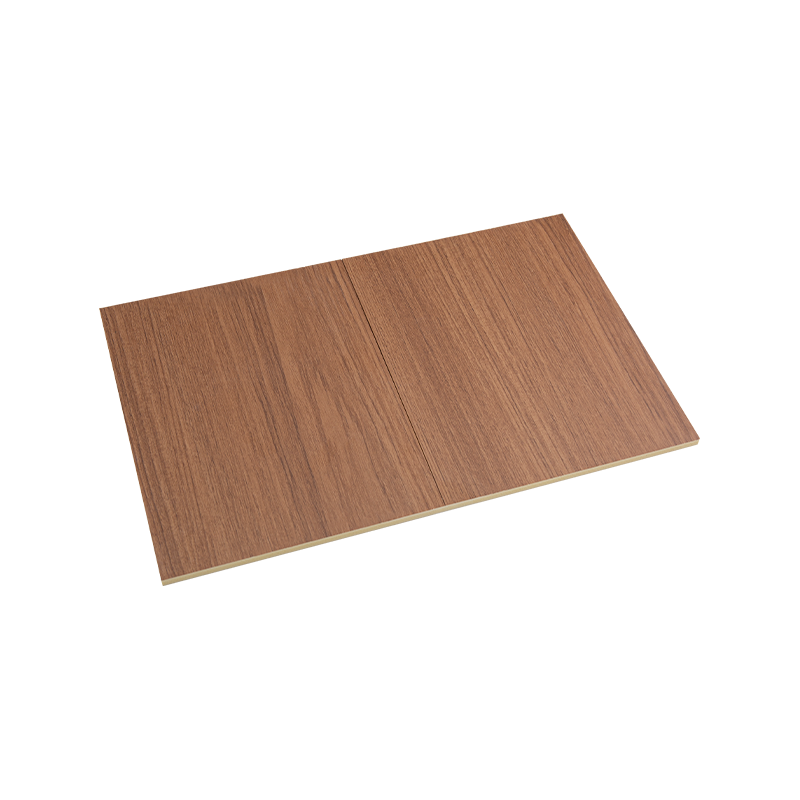
A decorative wall panel can look perfectly straight when it leaves the factory and still develop bowing, lifted edges or opened joints after transportation or installation. When this happens, the material itself is often blamed first. In practice, panel deformation is usually the result of several factors acting together: formulation, extrusion conditions, cooling, storage, temperature changes, substrate flatness and installation restraint.
For WPC wall panel manufacturers, distributors and interior contractors, understanding these interactions is important because warping is not only an appearance issue. Severe deformation can affect joints, decorative trims, surface finishes and the overall quality of an interior project. The most effective solution is therefore not a single installation trick, but a controlled process extending from raw-material preparation to final installation.
What Does “Warping” Actually Mean?
The word “warping” is commonly used to describe several different forms of dimensional deformation. Identifying the specific type of movement is the first step toward finding the real cause.
| Type of Deformation | Typical Appearance | Possible Causes |
| Bowing | The center of the panel curves forward or backward along its length | Residual manufacturing stress, uneven support, temperature differences or storage deformation |
| Cupping | The edges rise or fall relative to the center | Uneven temperature, moisture exposure or structural imbalance |
| Twisting | Opposite corners move out of the same plane | Uneven cooling, inconsistent material distribution or poor storage support |
| Edge Lifting | Panel edges separate from the substrate or supporting structure | Insufficient movement allowance, adhesive failure or uneven wall conditions |
| Joint Opening | Visible gaps develop between adjacent panels | Thermal movement, dimensional change or installation under unsuitable conditions |
These defects do not necessarily indicate the same problem. A panel that bows before installation may have a different root cause from a panel that remains flat for several weeks and then begins to buckle against a corner profile.
Material and Formulation Factors Behind Panel Warping
Wood-plastic composites combine a thermoplastic polymer matrix with wood flour or other lignocellulosic material. These components behave differently when exposed to heat and moisture, making formulation control important for dimensional stability.
Polymer Matrix
Different thermoplastic matrices have different stiffness, thermal expansion, processing temperatures and long-term creep characteristics. Even panels described broadly as “WPC” may therefore respond differently to temperature changes depending on their formulation.
For this reason, installation recommendations developed for one WPC profile should not automatically be applied to every other wall-panel system.
Wood Fiber and Moisture
Wood fiber is naturally hydrophilic, while most thermoplastic polymers are comparatively hydrophobic. Manufacturers therefore need to manage both fiber moisture and the interface between the wood and polymer phases.
If incoming wood flour contains excessive or inconsistent moisture, processing can become less stable. During extrusion, trapped moisture can become vapor and contribute to voids, irregular density or surface defects. Variation in fiber size, species or distribution can also alter the flow and stiffness of the composite.
Mineral Fillers and Additives
Many decorative composite formulations also contain mineral fillers and processing additives. Calcium carbonate, lubricants, processing aids, stabilizers, impact modifiers and coupling systems can influence stiffness, melt flow, fusion and dimensional behavior.
The important point is that dimensional stability comes from a balanced formulation. Increasing or reducing one component without validating the complete system can change how the profile behaves during extrusion, cooling and later use.
Extrusion and Cooling Can Build Stress Into the Panel
Some deformation problems begin before the wall panel ever reaches a warehouse or construction site.
During extrusion, the material is heated, mixed and pushed through a die before entering calibration and cooling stages. The profile must cool from processing temperature to a stable state while its dimensions are being controlled.
If cooling is not sufficiently balanced, different parts of the profile can shrink at different rates. The result may be residual internal stress.
A newly produced panel can initially appear straight because calibration equipment is holding it in position. Later, after the material is cut, packed, transported or exposed to temperature changes, part of that stress may be released and become visible as bowing or twisting.
Uneven Material Flow
Inconsistent feeding, unstable extrusion pressure or uneven dispersion of wood fiber and fillers can produce local differences within a profile. Variations in density or wall thickness may cause one side of a panel to respond differently from another during cooling.
Line Speed and Calibration
Production speed must also match the cooling and calibration capacity of the line. Increasing output without sufficient cooling can reduce the amount of time available for the profile to stabilize before it is cut and stacked.
This is why good extrusion control is not simply about producing more meters per hour. The objective is to achieve consistent dimensions and internal structure at a commercially efficient speed.
Hollow and Solid Panel Structures
Hollow and solid profiles present different engineering considerations. Hollow panels reduce material weight and can provide efficient structural geometry, but rib thickness, cavity design and cooling balance become particularly important. Solid profiles have more material across their section and may require careful temperature control because the interior and exterior can cool at different rates.
Neither structure is automatically “warp-proof.” Profile design and manufacturing control remain important in both cases.
Storage and Transportation Are Often Overlooked
A properly manufactured wall panel can still be damaged by poor handling after production.
Panels Need Continuous, Flat Support
Long decorative profiles should be stored on a level surface with appropriate support along their length. If bundles are supported only at a few points, the weight of the panels can gradually produce deformation, especially during extended storage or elevated temperatures.
Stacking surfaces should also be flat. A slightly distorted pallet can transfer that distortion into multiple layers of product when heavy bundles remain stacked for a long period.
Container Temperature Matters
Export wall panels can spend weeks inside shipping containers. Container interiors may experience substantial temperature changes between daytime heating, nighttime cooling, ports, ocean transit and final inland transportation.
Packaging should therefore do more than protect panels against scratches. It should also maintain straight support, distribute pressure evenly and prevent concentrated loads on long profiles.
Do Not Move Directly From Transport to Installation
A common project mistake is to unload panels and begin installation immediately. The panels may have arrived from a hot container, cold warehouse or humid logistics environment while the installation room operates under completely different conditions.
Allowing products to stabilize under project conditions before final installation can reduce sudden dimensional movement. The required conditioning period should follow the recommendations for the specific product rather than relying on one universal number.
Installation Mistakes Can Turn Normal Movement Into Warping
All construction materials move to some degree. Problems occur when the installation system prevents that movement or forces the panel to follow an unsuitable substrate.
Insufficient Expansion Allowance
WPC panels can expand and contract when temperatures change. If a long panel is tightly trapped between two fixed surfaces, normal expansion creates compressive force. The panel may then buckle outward because it has nowhere else to move.
Movement allowance may be required around edges, corners, openings and transitions. However, there is no correct universal expansion gap for every WPC panel. The appropriate clearance depends on panel length, profile design, material formulation, expected temperature range and the manufacturer's installation instructions.
Uneven Walls and Supporting Structures
Decorative panels should not be used to force an irregular substrate into alignment. If the underlying wall or batten structure is significantly uneven, fixing a relatively straight panel tightly against it can preload the material with stress.
The finished surface may initially look acceptable, but joints can later open or sections of the panel can pull away as the material attempts to return toward its natural shape.
Over-Fastening
Fasteners and clips need to secure the wall system without unnecessarily locking every point of the panel against dimensional movement. Overdriven screws or excessively rigid fixing can concentrate stress around fastening locations.
Dedicated installation profiles, clips and decorative trims can help manage panel joints when they are designed as part of the complete wall system.
Adhesive Compatibility
For systems installed using adhesive, the adhesive needs to be suitable for both the wall substrate and the rear surface of the decorative panel. More adhesive is not automatically better. Excessively rigid bonding, poor surface preparation or an incompatible adhesive can create uneven restraint or local separation.
Project Conditions Can Change the Warping Risk
The same panel can perform differently in different interior environments. Project planning should therefore consider where and how the product will be installed.
| Project Situation | Potential Risk | Recommended Focus |
| Long hotel corridor | Cumulative dimensional movement across a long wall | Joint planning, segmentation and expansion allowance |
| Hot climate | Greater temperature-related dimensional movement | Installation temperature and movement allowance |
| Fast hotel renovation | Panels installed immediately after delivery | Allow material to stabilize before installation |
| Uneven existing wall | Panels forced into an irregular plane | Correct or level the substrate before fixing |
| Large commercial wall | Small installation errors accumulate over distance | Regular alignment and joint checks during installation |
| Space with changing HVAC conditions | Repeated temperature changes | Correct fixing method and adequate movement allowance |
Product application is another important distinction. An interior decorative WPC panel should not automatically be considered suitable for exterior use simply because WPC materials can provide better moisture resistance than conventional wood products.
Exterior cladding faces more severe temperature cycles, solar exposure, wind, rainfall and drainage requirements. Products intended for exterior applications should therefore be specifically designed and installed for those conditions.
How Manufacturers Can Reduce the Risk
Warping prevention begins before the finished product is packed. Manufacturers can reduce variation by treating dimensional stability as a controlled production parameter rather than a final visual inspection.
- Control incoming wood-fiber moisture: inconsistent moisture can affect extrusion stability and internal structure.
- Monitor formulation consistency: changes in polymer, filler or fiber sources should be validated before full production.
- Check wall and rib thickness: uneven geometry can create differences in cooling and stiffness.
- Maintain stable extrusion conditions: temperature, pressure, feeding and line speed should stay within the validated processing window.
- Balance cooling: profiles need sufficient and uniform cooling before cutting and stacking.
- Measure flatness after stabilization: inspection immediately at the die exit is not enough.
- Validate packaging: bundles should remain properly supported during warehouse storage and international transport.
What Buyers and Contractors Should Check Before Installation
Manufacturing control alone cannot prevent every project problem. Buyers, distributors and installation teams also influence the final result.
Before Ordering
- Confirm whether the panel is designed for interior or exterior use.
- Check panel dimensions and profile structure.
- Confirm compatible trims and accessories.
- Ask for installation and storage recommendations.
After Delivery
- Inspect bundles for transport damage.
- Store panels flat and properly supported.
- Keep products away from unnecessary direct heat or water exposure.
- Do not lean long panels unsupported against a wall for extended periods.
Before Installation
- Allow panels to stabilize under suitable project conditions.
- Check the substrate for flatness, dryness and structural stability.
- Confirm joint and perimeter movement requirements.
- Plan panel and decorative-profile positions before fixing begins.
During Installation
- Maintain consistent alignment across the wall.
- Avoid trapping panels too tightly between fixed surfaces.
- Do not overdrive screws or other mechanical fasteners.
- Follow the recommended support, clip or adhesive system.
Warping Prevention Is a System, Not a Single Product Feature
A statement such as “this panel does not warp” can be misleading because dimensional performance depends on more than the material name printed on a specification sheet.
A reliable decorative wall system begins with stable raw materials and formulation control. It continues through extrusion, cooling, dimensional inspection, packaging and storage. Finally, it depends on the conditions of the building and the way the panels are installed.
For project buyers, this means that product selection should include questions about profile design, installation method and application conditions—not simply color, surface finish and price per square meter.
For manufacturers, controlling these variables provides another advantage: greater batch-to-batch consistency. That becomes particularly important for hotels, commercial interiors, retail projects and distributors that may reorder matching products months after the first shipment.
Planning a WPC Wall Panel Project?
Zhejiang QianDuoMu Intelligent Decoration Co., Ltd. provides WPC wall panels, decorative wall cladding, WPC decorative lines, aluminum decorative profiles and related interior decoration materials for residential and commercial projects.
When preparing your project, share the application, required panel dimensions, surface finish, quantity, wall conditions and destination market with our team. We can discuss suitable wall-panel structures, matching decorative profiles, customization requirements, packaging and installation considerations for your order.
FAQ
Why do WPC wall panels warp after installation?
Warping can result from several interacting factors, including residual manufacturing stress, temperature-related dimensional movement, poor storage support, an uneven substrate, insufficient expansion allowance or overly rigid fixing. The specific deformation pattern should be examined before deciding on the cause.
Does heat cause WPC wall panels to bend?
Temperature changes can cause WPC products to expand and contract. Heat alone does not necessarily create permanent warping, but problems can develop when thermal movement is restricted by tight joints, rigid fasteners, unsuitable installation details or uneven loading.
Can an uneven wall cause decorative panels to warp?
Yes. Fixing a relatively straight panel tightly against an uneven wall can introduce stress into the installed system. Significant substrate irregularities should normally be corrected or accommodated through an appropriate supporting framework before the decorative panels are installed.
How much expansion gap should WPC wall panels have?
There is no universal gap suitable for every WPC wall panel. The required allowance depends on the material formulation, profile dimensions, panel length, installation temperature and expected service conditions. Project teams should follow the installation requirements for the specific product.
Can a warped WPC wall panel be fixed?
Minor installation-related deformation may sometimes be corrected by releasing excessive restraint, correcting the supporting structure or reinstalling the affected section. Panels with permanent structural deformation may need replacement. The underlying cause should be corrected before replacement panels are installed.
How should WPC wall panels be stored before installation?
Panels should generally be kept flat, dry and adequately supported along their length. Bundles should be protected from concentrated loads and unsuitable heat exposure. Before installation, the products should also be allowed to stabilize under appropriate project conditions according to the product instructions.